Three quick rules
Apply these first, then use the table for specifics.
- IfThe surface is hard, non-porous and intactClean it. Glass, tile, metal, sealed stone, finished cabinets and good paint usually come clean.
- IfThe surface is porous but fixed in place and expensive to removeClean what you can, then seal it. Drywall, plaster, subfloor, raw wood framing and closet shelving fit here.
- IfThe item is soft, absorbent and replaceableStrongly consider replacing it. Carpet pad, cellular shades, pillows, mattresses and cheap upholstery rarely lose the odor.
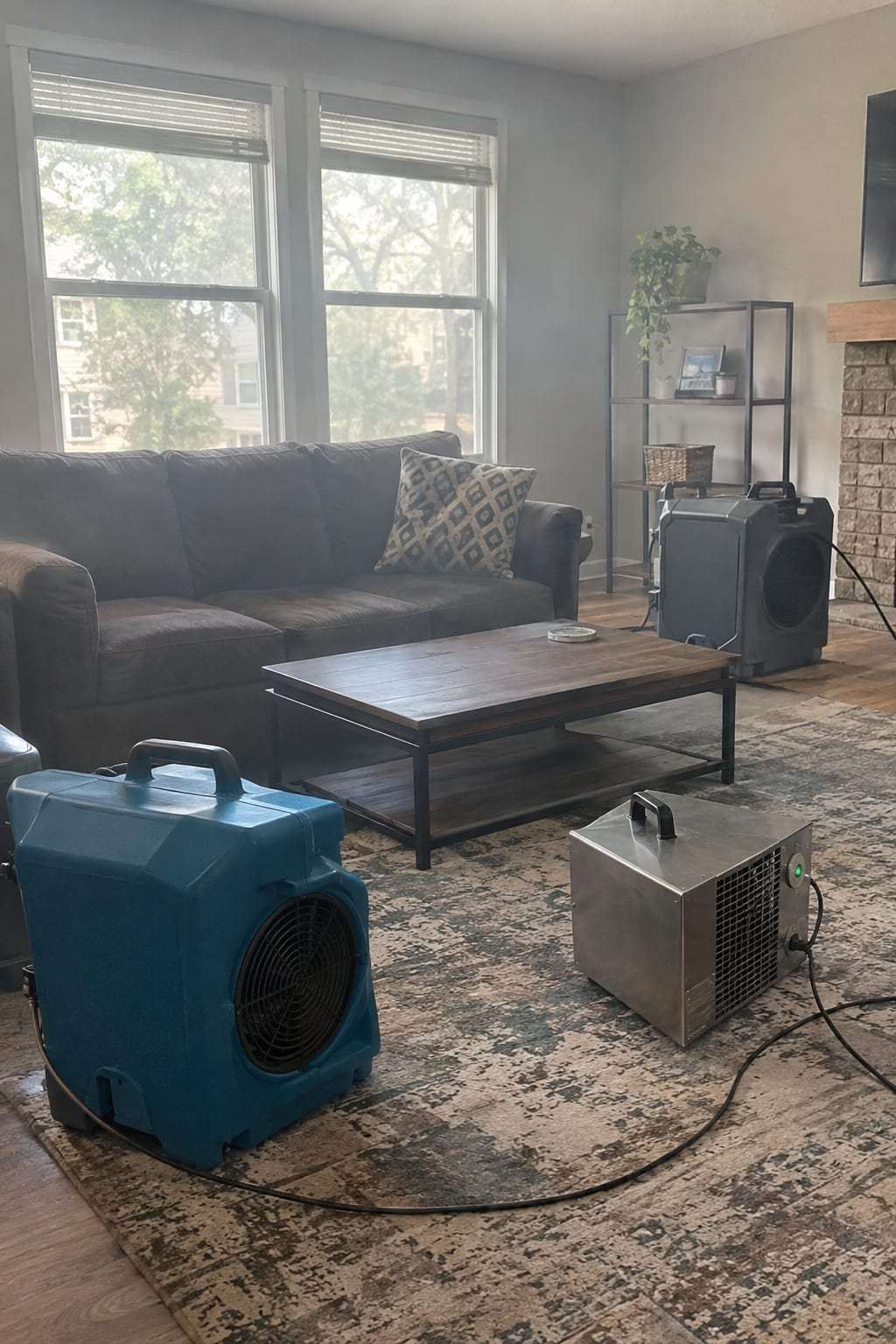
Material guide
| Material | Usual call | Notes |
|---|---|---|
| Painted drywall and plaster | Clean, then seal | Ceilings included; prime before repainting |
| Painted trim and doors | Clean, then seal if tinted | Test for lead in pre-1978 homes before sanding |
| Stained or varnished woodwork | Clean carefully | Finish type decides the method; see the paneling guide |
| Kitchen cabinets, finished | Clean | Interiors and the undersides of uppers are the hard part |
| Closet shelving, raw wood | Clean, then seal or replace | Cheap particleboard is easier to replace |
| Carpet | Usually replace if older or heavily affected | Cleaning may help newer carpet with light exposure |
| Carpet pad | Replace | Pad is inexpensive and holds the most odor |
| Hardwood floors | Clean or refinish | Sanding removes the top layer and residue with it |
| Upholstered furniture | Specialist cleaning or replace | Cushion foam is the main reservoir |
| Leather furniture | Clean and condition | Padding beneath may still hold odor |
| Mattresses and pillows | Replace | Very difficult to treat |
| Hard blinds and shutters | Clean | Restring if cords hold odor |
| Drapes | Specialist cleaning or replace | Lined drapes are often worth trying |
| Cellular shades | Replace | Residue sits inside the cells |
| Light fixtures and fans | Clean | Fan blades and glass shades collect heavy film |
| Ductwork | Clean | Flex duct in poor condition may be replaced instead |
Before you decide to keep something
- Would you pay to replace it if it were lost tomorrow? If not, cleaning may not be worth it.
- Can it leave the house during the work, so it does not slow down treatment of the rooms?
- Is there a specialist who cleans this item, and have they handled tobacco odor before?
- Will you be satisfied if a faint odor remains?
- Does anyone in the household have asthma or sensitivities that make a trace of odor unacceptable?
General information for Cherry Creek, not a quote or professional advice. In an emergency, call 911.